


- ISRO Develops Advanced Flight Dynamics “Orbit Determination” Software for its Aditya-L1 Mission
- Flying to L1 point is Tricky, But ISRO’s New ADVANCED FLIGHT DYNAMICS Software Is Trained for the Job
 Bangalore, September 8. The Indian Space Research Organisation (ISRO) has developed Advanced Flight Dynamics Software for its Aditya L1 Mission. It launched its Aditya-L1 solar observatory from Satish Dhawan Space Centre in Sriharikota Range (SDSC SHAR), in Andhra Pradesh, at 11:50 IST on 2 September 2023.
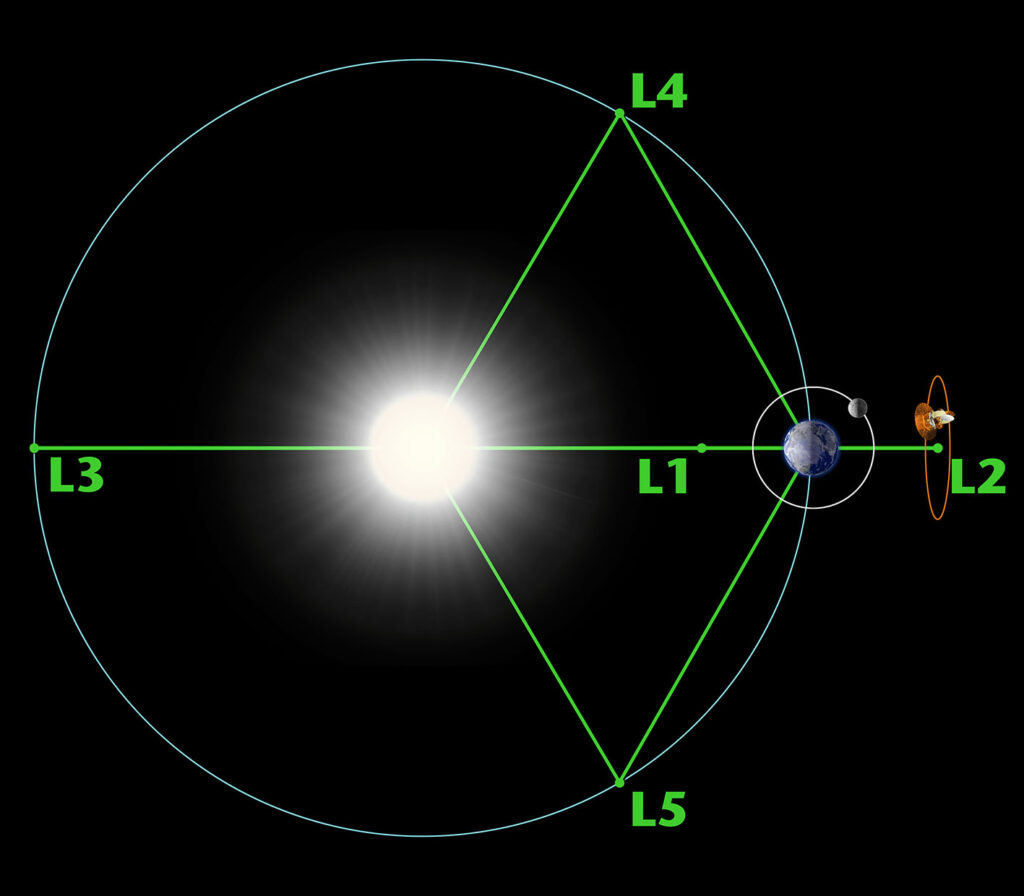
To get to Lagrange Point 1 (L1) and safely stay in orbit, operators need to know exactly where their spacecraft was, is and will be.
To do so, they apply mathematical formulas to the tracking data from the spacecraft to calculate its past, present and future location in a process known as ‘orbit determination’.
Orbit determination is carried out with the help of specially designed software. ISRO has designed and developed new orbit determination software for Aditya-L1. However, given the tiny margin for error that comes with operating a spacecraft at L1, they requested support from European Space Agency (ESA) to validate it.
European Space Agency puts it to Test
From April to December 2022, ESA and ISRO teams worked together intensively to evaluate ISRO’s strategy for operating Aditya-L1 and challenge their new orbit determination software.
“With its experience flying and even rescuing missions at the Lagrange points, ESA was in the perfect position to help ISRO improve their new orbit determination software and demonstrate that it has the fidelity and accuracy that the organisation needs in order to operate a spacecraft at a Lagrange point for the first time,” according ESA Flight Dynamics expert Frank Budnik.
First, the ESA team invented typical scenarios that the ISRO team could face when operating Aditya-L1. Both teams then used their own orbit determination software to predict how Aditya-L1’s orbit would evolve in these scenarios and compared their results.
The next step saw ESA provide ISRO with simulated tracking data similar to the data that ESA uses to train its own flight dynamics teams.
This includes data typical of a spacecraft’s critical Launch and Early Orbit Phase, a complex orbit insertion manoeuvre or even a planetary flyby. The ISRO team used their software to analyse the data, and then both teams worked together to detect any areas that could be improved and fine-tune some of the algorithms.
Finally, the ESA team provided the ISRO team with tracking data from a real spacecraft orbiting L1. Both teams used their own software to analyse the data from ESA’s former LISA Pathfinder mission and compared their results once again.
The results of the exercise were valuable for ESA and ISRO and both teams are confident in the capabilities of ISRO’s software.


