


 This headline summarising the evolving and current ties between New Delhi and Washington DC might be seen as exaggerated, but if you look at the history of US presence in the Indian Ocean and Pacific, you would note a persistent effort by Washington DC to either win New Delhi, or to put pressure on it for not falling in line with American interests. The evolution of QUAD is partly a result of this diplomacy.
In 1980, I worked with UNI and while visiting Colombo on a regional tour before leaving for my assignment as Foreign Correspondent in Abu Dhabi, I was surprised to learn that the Sri Lankan Government had accepted a US request for a Rest & Recreation (RR) naval base in Trincomalee. I did a report on return, and soon after, Colombo had to decline the US request due to resistance by Prime Minister Indira Gandhi. Trincomalee is a short hop from the southern tip of India, and she told President Jayawardene that the US naval presence on the southern doors of India would not be acceptable, doesn’t matter the acronym RR for Rest & Recreation. The President appreciated it and the Indo-Sri Lankan diplomatic trajectory kept its pace.
The US has tried many a time to draw India in its global games, but India had no heart for either the US-led NATO or Soviet-led Warsaw Pact. When India conducted its Peaceful Nuclear Explosion on 18 May 1974, Washington led a western technology ban on India, and Canada was the first country to react and cancel the visas of three Indian Atomic Energy scientists due to go there for training. (It was my newsbreak).
There’ve been upswings and downswings over the decades. Mrs Gandhi demonstrated India’s capability to make the n-bomb; it was Rajiv Gandhi who issued the orders to Make It in March 1989. It’s a different matter that it could be tested only in 1998 with the then Prime Minister AB Vajpayee acknowledging that his predecessor Narasimha Rao had told him that the device is ready, and that while he could not himself press the button due to intense pressure from Washington, “You should please do it right away.” He did.
Washington has been offering advanced military technologies to India since 2000. The first deal for a hi-tech system was that of Raytheon’s Weapon Locating Radars (WLRs) in 2004 to detect hostile artillery fire. Apparently at the instance of State Department, Boeing, Lockheed Martin and Honeywell joined the fray, and thanks to its well-structured campaigns, and of course formidable technologies, Boeing has sold nearly all its systems sans a Fighter Jet or the V 22 Osprey. And Lockheed Martin, its highly capable Special Ops transport aircraft C 130J and Sikorsky MH 60R helicopters.
India’s biggest weakness has been in developing a Jet engine.
India has not yet decided to buy either the Boeing F/A 18 Super Hornet or Lockheed Martin’s F 21 that are powered by GE F 414 engines, but President Joe Biden has authorised GE to share its technology with HAL for its Light Combat Aircraft (LCA) variants. He has also cleared the sale of 31 highly advanced General Atomics MQ 9 Predator series of Unmanned Aircraft Systems.
These developments are defining for the Indo-US Relations in the years to come.
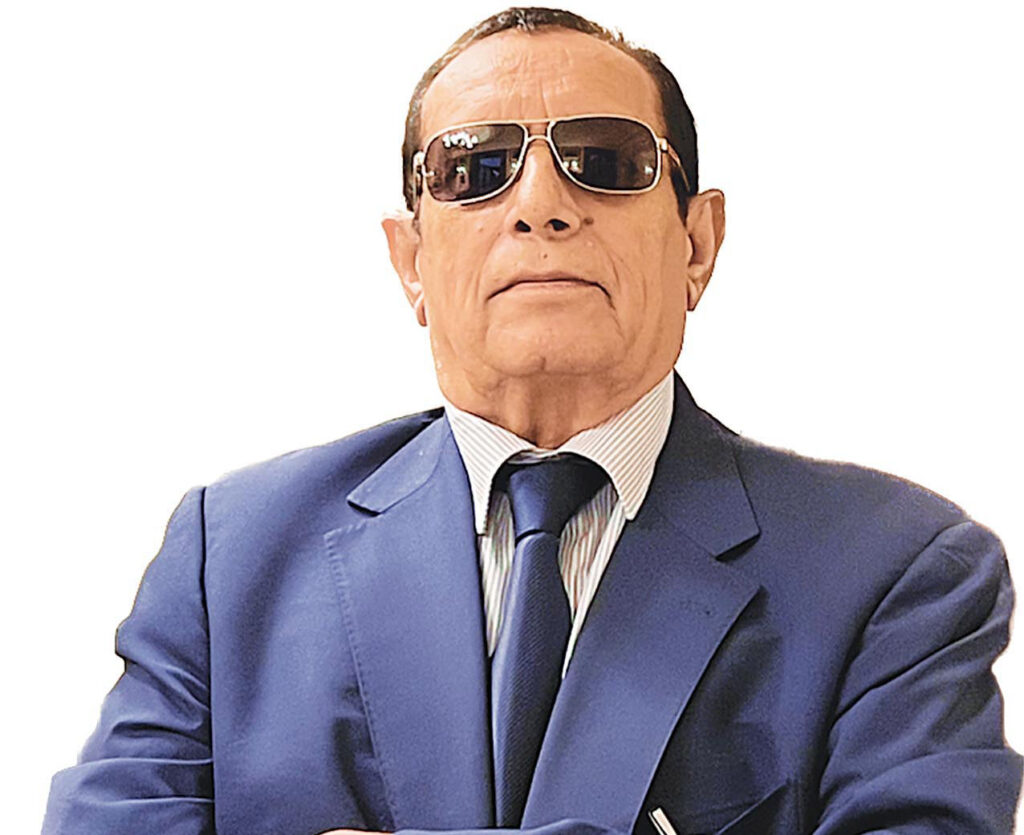
— Gulshan Rai Luthra


