


By R. Anil Kumar
Synopsis
India has asked G20 nations to contribute to G20 satellite through payloads, instruments
India has requested G20 nations to contribute to a proposed G20 satellite for weather and climate observation. The satellite will measure parameters such as air pollution, greenhouse emissions, humidity, and ocean behaviour
ISRO chief S. Somnath said India aims to make the data available to the entire world for weather modelling and scientific research
Bangalore, December 30. Today, India stands at the cusp of technology-led transformation, and the space sector plays a crucial role in making this happen.
The India’s space sector has played a key role across several application areas including enabling services and applications across several domains, which includes communication, weather forecasting, disaster management, agriculture, navigation, remote sensing and many more areas.
Traditionally, ISRO has been leading the space-sector in India along with active participation from private players.
The technological advancements, data revolution and diversified application possibilities have attracted increased interest from domestic and international communities-both public and private sectors-thereby expanding the scope of investments in space.
The time now is ideal to invest in the space sector, as the global space economy which stood at $447 Billion in 2020, is expected to shoot up to $600 Billion by 2025.
The Government of India, under Prime Minister Narendra Modi, is initiating reforms which are being structured through conducive policies and regulatory frameworks, to build a robust enabling space-ecosystem, at the same time ease of doing business, for investments to flow in the space domain.
India has existing Space cooperation with almost all countries and looks forward to utilise this opportunity to promote our space sector to the world. In this endeavour ISRO is planning a satellite exclusively for G20 countries.
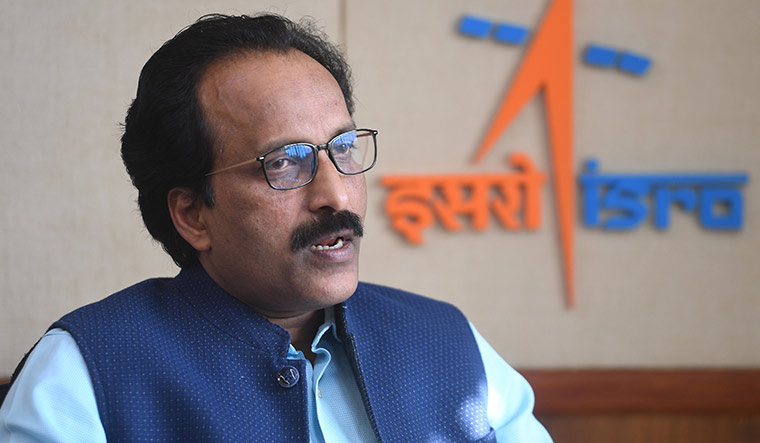
Highlighting on this initiative ISRO Chairman S. Somanath said,India has asked the G20 nations to contribute to the G20 satellite proposed by it, through payloads, instruments and it will be launched in the next two years, ISRO chief added.
Underlining that weather and climate are going to be important aspects, Somanath said India wants to contribute in this domain by measuring various parameters like air pollution, greenhouse emission, humidity change and precipitation, ocean behaviour, current, waves, soil moisture, and radiation budgeting. ISRO is planning a satellite exclusively for G20 nations to study these conditions, Somanath said. “We offered to build a satellite and we are asking the G20 nations to contribute to this satellite through payloads, instruments that they can develop here, he added.
“We are going to launch (the satellite) in two years. That will be the contribution of India to the whole of the world,” Somanath said.
In September, Prime minister Narendra Modi had proposed to launch a G20 satellite for environment and climate observation. “We want to make sure the data is available to the entire world and every nation so that they can use it for their weather modelling, and scientific research.
We are welcoming each one of the scientific communities of the world to build a satellite for the world,” Somanath added. ISRO is also set to launch Xposat mission on new year’s day to study Black Holes and neutron stars. This will mark the 60th mission of the Polar Satellite Launch Vehicle (PSLV).
This will also be the first dedicated polarimetry mission in India and second globally, after Nasa’s Imaging X-ray Polarimetry Explorer Mission launched in July 2021.
Five days later, India’s first mission to the Sun, Aditya-L1, is set to reach its destination—Lagrange point 1—at 4pm on January 6. The Lagrange point is 1.5 million km away from earth.
50 satellites with strategic applications are being planned for monitoring our borders, studying possible changes in troop movements, many of which will use artificial intelligence, he added.
Speaking about future Indian rockets, Somanath said they are planning the ones that will be reusable as well as those to be used for space tourism.


